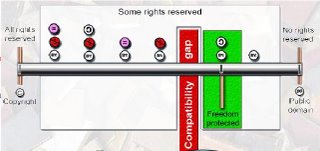
Wednesday, June 28, 2006

Gilberto Gil's Great Website


Gilberto Gil, legend of latin american music and current culture minister of Brasil, has a great website. In addition to videos, interviews, and writings, the site contains streaming audio for every track on every disc spanning his incredibly prolific musical career. Many of these discs are tough to find - such as this great live version of Kaya N'Gon Daya, his Bob Marley tribute album. For more on his perspective on open software and copyright reform, see this article from the Guardian. Here's an except:

He is politician enough to hold back from endorsing the breaking of laws, for example on music downloading, but only just. "The Brazilian government is definitely pro-law," he grins. "But if law doesn't fit reality anymore, law has to be changed. That's not a new thing. That's civilisation as usual." (He is not a hi-tech person himself, he says, but readily concedes that his children have "probably" done a fair bit of illegal downloading.)

Also check out these speeches from NYU and Berkeley.

Tuesday, June 27, 2006

10 Beautiful Women Who Are Way More Intelligent Than You


From Yongfook, the Japanese Food and Tech Blog, a list of ten women who are as brilliant as they are beautiful. For example, see Mira Aroyo: Bulgarian model, lead-singer of Ladytron, and a genetics PhD graduate from Oxford University. Or Queen Rania of Jordan who in addition to wealth and hotness, can boast of her involvement in several core economic and welfare-related issues including best practices in the field of microfinance. And Carmen Kass, the young lady pictured? - President of the Estonian Chess Association. See the whole list (Warning: some of the language and comments are not very tasteful and probably not safe for work).

Monday, June 26, 2006

Free iPod Tourguides Map


A few months back, I gathered together a number of free iPod tourguides. Here's a map of the locations via Wayfaring (unfortunately, I couldn't include several guides that are no longer available). Be sure to also check out the Wayfaring map of University Podcasts and OCWs.

Friday, June 23, 2006

Take On Me


A-Ha's "Take On Me". Part of Pitchfork Media's 100 Awesome Music Videos.

Some very difficult analytical puzzles. Less difficult ones are also available. (photo by plusverde)


From popsicles to X-Rays, the top 10 accidental discoveries.


The Completely Useless, Yet Interesting Fact Collection is a huge database of worthless-but-true information.


A list of free science and math lectures online. Many of these will be familiar, but it's a handy round-up.

Thursday, June 22, 2006

The Greylodge GPod


Greylodge's GPod selects a great mix of "underground" art, podcasts, and documentaries. Each posting contains a short, informative background and multiple links to the selection (often at Ubuweb) allowing easy access to the content. From eclectic cinematic shorts, to Japanese children's comedy shows, to bedtime stories with the antichrist, it's an endless stream of interesting stuff.

Wednesday, June 21, 2006

The Internet Detective (& Puppies!)


Sorry that I'm behind in the posts - i've had a pretty busy week. As always, here are some cute puppies.

The Internet Detective is a research guide showing internet-savvy university students how to make the most of web resources while avoiding common pitfalls. Included are tips on smart internet research, exercises on evaluating the quality of information, and tips on avoiding plagiarism and copyright infringement. One of the site's most important messages is that key resources may not be found on the internet. Students should be aware of the academic evaluation process and use all resources at their disposal.

Tuesday, June 20, 2006

Guide to DRM-Free Audio


Jon Bischke wrote a post on the Learn Out Loud blog about sites offering DRM-free audio. There are lots of interesting music and audiolearning sites listed such as AudioLunchbox, betterPropoganda, and iAmplify.

P.S. It's my birthday!

Monday, June 19, 2006

Easy Online Powerpoint

Microsoft Office includes some great programs, but it's often really hard to do simple things (for example, MS Word styles). In this respect, Powerpoint is probably one of the worst culprits. Putting aside aesthetic complaints, a casual user can find it pretty tough to create some simple slides or graphics.

Gliffy is a solution to Powerpoint woes. Another AJAX, web-based program with the feel of desktop software, Gliffy contains a simple drag-and-drop interface. The site contains lot of shapes and frequently needed images for designing an apartment floorplan or a computer network. It's very easy to alter sizes, shapes, and colors. Afterwards, you can even publish the image on another site (sounds perfect for Craigslist). Here's our apartment:

Sunday, June 18, 2006

Things I Probably Should Have Mentioned


Folk Implosion "Natural One"

As I've said before, roughly 90% of the links I post come from del.icio.us. Whenever someone tags a site "academic", "education", "university", or a combination of various other tags, I receive an RSS notification. Every day, I browse through several hundred links and choose sites that are (1) substantial, (2) interesting, and (3) genuinely free. The other 10% of the links come from browsing other sites or email recommendations (thanks!).

The criteria for exclusion is somewhat hazier. Generally, I don't post sites that are extremely technical or narrowly focused (such as many excellent programming tutorials). I also don't post sites that have already heavily discussed in the blogosphere.

However, I realize that many readers don't religiously go on Lifehacker, Boing Boing, and Digg. So here's a round-up of some popular sites that I probably should have mentioned:


Professor Alex Halavais shares some advice on How to Cheat Better. Tired of reviewing poor attempts, he suggests the students make a decent effort and follow some of his tips such as "Borrow from someone who writes as badly as you do" and "Edit>Paste Special>Unformatted Text".


A concise list of 10 basic grammar mistakes you can easily fix.


This course on computer cryptography from the University of Washington is one of the most complete open coursewares online. (Image from Anna in Galicia).


Google's Shakespeare site
attempts to be a portal for all things Shakespeare, helping students find reviews, choose editions, and even visit the Globe Theatre via Google Earth.


yWriter is a tool for organizing your great novel. Check the Lifehacker comments for some other suggestions.


From Boing Boing, a site with tons of resources on Victorian London. (Thanks to Jessica Browne for the pic)

Thursday, June 15, 2006

Finding Pearls

The OAIster project is after my heart. How often have you been prompted to pay $30 to read an article found on Google Scholar search? Or been frustated by lack of access to the JSTOR database? Not here. We're talking about free materials. Quality materials. No sifting. Free access. Free. Free. Free.

Take everything you like about Highwire or the SSRN. But cut out the crap. And you have OAIster. To top it off, the search is excellent, allowing you to choose media type (audio, video, etc.) and the sorting of results. Even more features are on the way. This is how it should be.

Wednesday, June 14, 2006

Kiddie Records

Both nostalgics and retro hipster will love the Kiddie Records collection of old 78's converted to high-quality mp3's and jpeg's. This 2-year project has already posted an ample number of classic albums from the 40's and 50's including major productions from Disney. Sounds to me like a good way to pass long car trips.

Tuesday, June 13, 2006

Let's Get Political

Some excellent political sites from Fred Lapides:

The Cold War International Project contains a very deep selection of key documents related to communism. Best of all, this project organizes the documents by subject, location, and other filtration methods.

Next, in George Washington University's National Security Archive, great source documents are available on the Pentagon Papers and Nixon's paranoia. Streaming audio of phone conversations, US Supreme Court opinions, and memoirs are all available.

Finally, here's a great site on Charles Bukowski. Not very political, but you can read his FBI file. (Thanks to Natalia for the photo).

Sunday, June 11, 2006

Amazing Video Collection


Les Rita Mitsouko's "Marcia Baila". One of many music videos in popef**ker33's amazing video collection.

Things I know about popef**ker33: He's fascinated by violent death and government conspiracy. He listens to Atari Teenage Riot. He's french. He likes documentaries and classic cartoons. He's a fan of surreal and twisted art. He's studying Japanese. He's probably done alot of drugs. He's very angry. He's probably not a good guy to bring home to the parents ("Why popef**ker33, such a thoughtful young lad, however did you know that white chocolate truffles were my favorites?" Doesn't seem very likey.)

At the time of this post, popef**ker33 has posted nearly 1000 awesome videos to Google Videos. Here's just a small sampling:

Un Chien Andalou


Stephen Hawking's Universe 02


Les Kiriki Acrobates Japonais (1907)


The Skeleton Dance (1929)


Andy Kaufman's Mighty Mouse

Thursday, June 08, 2006

The Fantastic in Art & Fiction

This collection from Cornell's Institute for Digital Collections contains beautiful and bizarre images from rare books in Weird Science, Bestiary, the Grotesque, and other fantastic literature themes. The images can be viewed by theme, by book, or all at once.

Wednesday, June 07, 2006

Gray Matter Mad Science


Popular Science's archive of Theodore Gray's mad science column contains three years of melting, magnetizing, and blowing things up. See how to launch a rocket with oreo cookies, make your own lightbulb, or save a snowflake for decades.

Tuesday, June 06, 2006

Commencement Cartoon


A clever cartoon from today's Boston Globe. On this topic, check out the downloadable audio of Steve Jobs' Stanford speech - a commencement classic.

Also - iPod in Education is an interesting site that was created to keep track of the growing variety of uses for the iPod in the classroom. Unfortunately, the ambitious site hasn't beenupdated much recently.

Monday, June 05, 2006

Landmark Education on Web 2.0


You always have to be careful when browsing free materials. All too often, there is a hidden objective. Sometime it's money, but sometimes it's just wacky and unpredictable. Apparently harmless communism documentaries are on a mission from God. A search for information on textbook reform leads to a discussion on "Lies In The Textbooks" - such as evolution. I'm not even going to link to the rascist nonsense on AIDS and the Holocaust.

When I was living in New York, I heard some horror stories about Landmark Education's creepy recruiting techniques and secret organizations. I don't know the truth to these claims, but both the French and German government have listed the organization as a cult (although this was later retracted - dum dum dum!)

I don't see anything in this "Coming of Age" manual other than 92 pages of introductions to Web 2.0 technologies and a ton of great links. Use at your own risk. I will not take responsibility for sudden urges to "donate" or sentiments that Tom Cruise seems to be settling down and makeing sense.

Saturday, June 03, 2006

The Golden Book of Chemistry Experiments


The Golden Book of Chemistry Experiments is posted as a torrent on Mininova and is currently very well seeded. This classic from the 60's contains hundreds of experiments and great art. Direct link to torrent.

Friday, June 02, 2006

L'amour de Classroom Tech


Since everyone liked the Pet Shop Boys video last friday, I thought I'd post some more classic, sexually ambiguous pop-tronica. Erasure "Oh L'amour".

SVSD Classroom Technology has posted a couple of really useful webware and software over the past few weeks:


Wink
is a program that makes screencasting easy. Use it to create flash presentations.


Captioner adds comic-book styled captions to your photos.


Eyespot
is one of the better new sites for loading and editting your videos.

SocialLearning.ca is a network of British Columbian educators introducing the basics of podcasting, blogging, and Web 2.0 apps.


Also, check out the Free iPod Book 2.0 from iPod lounge. Lots of good stuff in there. And it's free. Direct link to download mirror.

Thursday, June 01, 2006

Wednesday, May 31, 2006

Bob Keller's Jazz Page

This page has TONS of jazz related links to academic articles, mp3's, instruction, theory, info on musicians & instruments, workshops, and more. By far, this is the biggest collection of jazz related links that I've ever seen. (Thanks to Duncan for the photo).

Tuesday, May 30, 2006

Fake States

Today, in one of the free newspapers handed out on the Madrid subways, I saw a great article on unrecognized states proclaimed by crooks, idealists, and rebels. Fortunately, most of these nations have websites. Here are some of the island descriptions (translated from the article):

Sealand: This nation is only a platform outside British waters that the Bates family occupied and declared an independent state. While its status was being argued, more that 150,000 fake passports were issued by mafias from all around the world.



Gay & Lesbic Kingdom: In June of 2004, a group of gay and lesbian activists left the coasts of Australis towards the coral reefs as a protest against the Australian government for failing to legalize gay marriage. Dale Parker was proclaimed emperor with the name Dale the First.

Conch Republic: The habitants of Key West in Florida were fed-up with the police closing the highway united them to the continent. In 1982, they declared themselves independent from the US and declared war. Mel the First is their king.
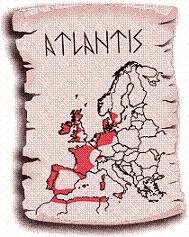


United Kingdom Atlantis (no link): A micronation created for fraudulent purposes. The nation was supposedly composes of several small islands in the Pacific. Many investors were swindled by the promise of a tropical tax haven.



The Hutt River Province: Leonard George Casley was a farmer in the west of Australia arguing with the government over the price of grain. Claiming authority under a 15th century law, he declared independence in 1970 and proclaimed himself Prince Leonard the First. Today, he profits from souveniers and tourism.
New Utopia: A desert island in the Carribean. An American investor named Prince Lazarus with a vision for the future. This is New Utopia and the image of an airport over the ocean that he wants to construct. Hotels, tax paradise, and consultation all in one place.
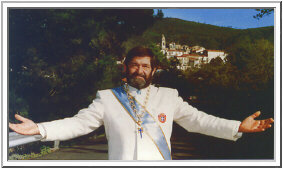
Seborga: With eyes fixed on nearby Monaco, this small Italian town of Seborga on the French border argues historical rights to proclaim independence.

Kalakuta Republic: Fela Kuti is an African music legend. A legendary saxofonist, activist, and great lover of live. In response to the repression of the Nigerian military regime, Kuti founded his own republic in the local bar. It was raded and overthrown by the police.

Araucania: Orelie-Antonie de Tourens travelled in 1860 to the land of the Mapuches (south of Argentina and Chile) and demanded the kingship. His reign was brief, but his heirs maintain the crown and title.

Monday, May 29, 2006

On the Wheel & Not Reinventing It


Over the past few weeks, Jason Turgeon, Charles & Steve from Free Curricula Center, and I have been discussing whether to create a "yellow pages" portal of free educational resources. Ultimately, we decided against it.

Between Merlot and the OER wiki from UNESCO-IIEP, there are already two high quality resources. So, instead, we are focusing on making these sites as complete as possible. Of course, we encourage all of you check them out and lend a hand.

Friday, May 26, 2006

Fly Little Bird


Flashback to the mid-90's with Pet Shop Boys' "Can You Forgive Her?". I loved this album and love it even more after seeing this bizarre video.


Since we're on the topic of graduation speeches, flylittlebird is a site worth visiting. The dropstone group gathered a 150 graduation speeches together and attempted to code and extract "meta-advice" by combining the insights together. I'm not sure if the results are really all that interesting: volunteering, life-long learning, democratic participation, etc., but the site does contain a great archive and detailed documentation of the process.


Playing With Time
contains time-lapse videos of changing seasons, building constructions, cats lapping milk, and much more. The site, which accompanies a travelling exhibition, also contains a toolkit and ways to participate.


For those David Aronofsky fans that see the music behind elegant mathematical proofs, the Metamath Music Page is with you. The site contains midi represenations of famous proofs along with explanations of the processes.

Thursday, May 25, 2006

Wayne Coyne Commencement Speech

Wayne Coyne of the Flaming Lips was asked by his former Oklahoma City high school to give a commencement speech to the graduating class. Much like their music, the unusal speech tends to meanders a bit, but contains some entertaining and clever moments: Wayne encourage graduates to combine their knowledge with experience and to view their future selves as a product of each action they take: "We cannot know what we will become, but we can control what we do".

Part 1
:


Part 2:


Also check some of these other Flaming Lips gems on You Tube such as their appearance on Beverly Hills 90210 and this 1992 live footage of Talking 'Bout the Smiling Deathporn Immortality Blues.

Drugs in de Hersenen

This Dutch site has detailed flash animations on how various drugs affect the brain. The animations are very informative and easy to follow - even for those without much background in biology. Drugs covered include ecstacy, speed, cocaine, marijuana, heroine, alcohol, and nicotine.

Wednesday, May 24, 2006

Celebrity Textbooks


After a half-hearted, losing battle with my wife, we've changed our computer homepage from the BBC to Popsugar. I liked this graphic posted today for a mock celebrity textbook of the future, reminiscent of the funny (but legitimately informational) Britney Spears' Guide to Semiconductor Physics.

Tuesday, May 23, 2006

Throw Away Your TV

Normally, this would be a Friday Club at Stu's type post, but no one should miss this index of hundreds of complete cartoons on YouTube.


Or try these links to more serious videos:
Internet Archive: Moving Images
The Open Video Project
Throw Away Your TV
Google Video: Genre=Educational/Duration=Long

Monday, May 22, 2006

Truly Free Content

Over the past few weeks, I've been subscribing to an UNESCO list-serve discussion on the development of a "Do It Yourself" guidebook for open educational resources. One of the participants, Professor Derek Keats, raised an interesting discussion on the different Creative Commons licenses and the distinction between what he calls "open materials" and "free materials". Derek created this flash animation to explain the
difference and to encourage educators to release their materials without the non-commercial restriction.

At first, the non-commercial restriction seems like a fair compromise: the materials are made available while remaining safe from leeches wishing to profit off your work. In the long run, however, Derek believes that any restriction impedes the free flow of materials and ideas within a system. For instance, while I may feel like I'm making my materials available but student can't turn my materials into a play and sell tickets. Publisher who can't reach me won't be to adapt the materials. Ultimately, these materials tend to fall to the wayside while truly free materials continue to flourish.

From personal experience, I can see the effect of impediments in the images I select from sxc.hu. While it's not much work to inform and thank photographers for their images, I tend to pick the pictures that don't require this formality. By placing this example in a larger context, one can appreciate the effect of even the most minimal restrictions in the flow of information. Think about the success of Wikipedia - sure there are some leeches trying to copy the entries and make a quick book. But compare that small negative in comparison to the success of the project.


So check out the animation and come up with your own opinions. The creative commons movement has been very positive and it's great to see so many educators making their materials available. However, the knee-jerk reaction to keep the work non-commercial might be a larger disservice than it seems. If you want to foster the "rip, mix, learn", don't impose restrictions, even if they, at first, seem reasonable. How can you anticipate what someone might want to do with your stuff?

To view the presentation, click on this link and choose "Free and Open Resources for Education" from the View box on the bottom-left of the screen. Next, select "Prof Derek and the NonCommercial Restriction on Freedom in Educational Content". Also, here's the link to the UNESCO IIEP Virtual University projects and lists.